



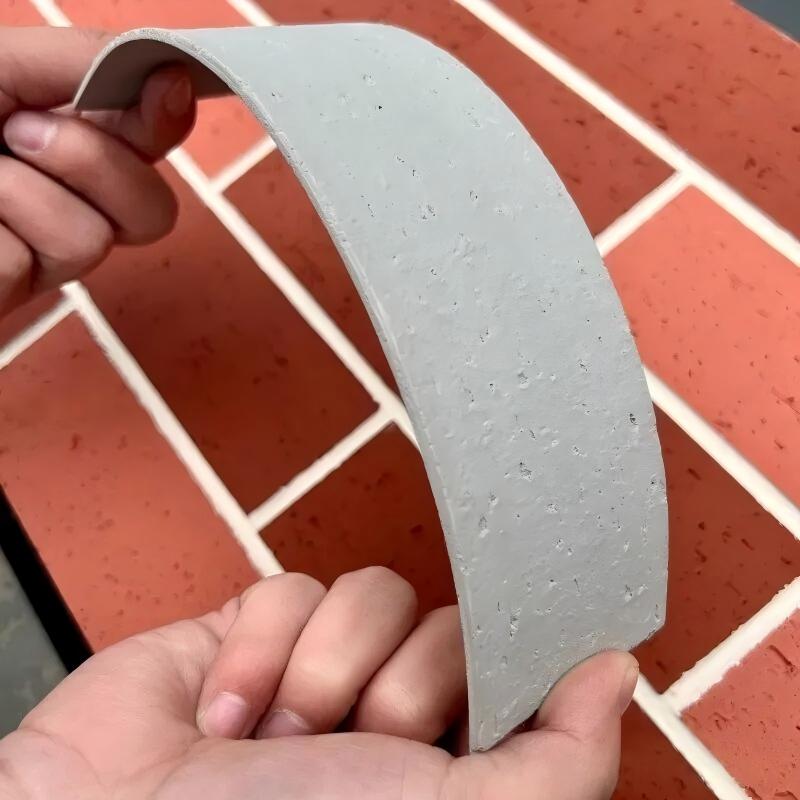
Hold a slab of marble-textured material that bends. Feel its supple, leather-like softness. It's hard to believe this is an innovative masterpiece from Olinmat.
Deep within the industrial park workshops of Olinmat's partner manufacturers, a new material—Flexible Stone Veneer—is steadily rolling off the production line.
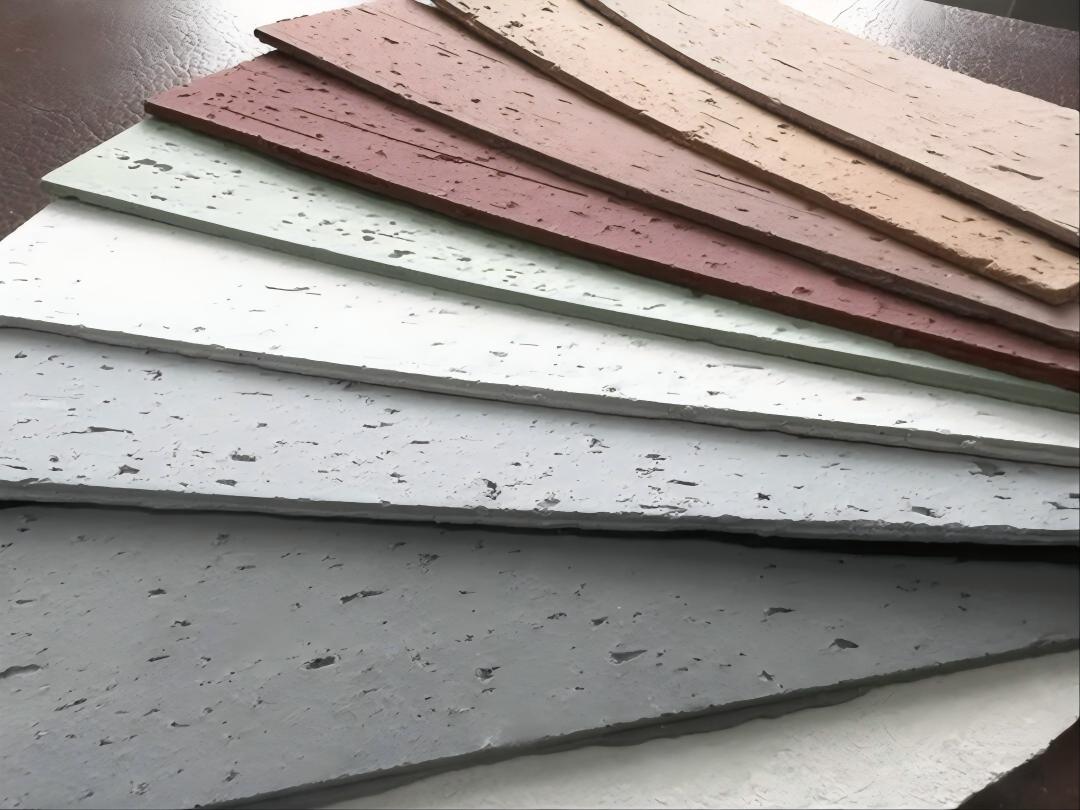
With a thickness of merely 3 to 5 millimeters, this material meticulously replicates every vein and texture of natural stone. It completely overturns the conventional perception of traditional building finishes as being heavy, rigid, and fragile.
01 Industry Challenge
The Downfall of Traditional Tiles
Natural stone and traditional ceramic tiles, the mainstays of architectural decoration, have long been plagued by inherent limitations.
High Dead Load: Weighing dozens of kilograms per square meter, they add significant structural load and drive up transportation and installation costs.
Inherent Brittleness: Their rigid nature results in poor crack and seismic resistance, making them prone to cracking, delamination, or even falling off due to temperature changes or foundation settlement, posing safety risks.
Unsustainable Production: Quarrying natural stone damages ecosystems, while firing ceramics is energy-intensive and highly polluting—practices that starkly contradict today's green, low-carbon development trends.
02 Redefining the Material
What is Flexible Stone?
Despite its name, Flexible Stone is not actually "stone." It is a flexible architectural finishing material made primarily from modified soil. It is formed, baked, and irradiated cross-linked using a specialized temperature-controlled molding system.
The Raw Material: Flexible Stone Veneer, a star product under this technology, is designed to mimic and even surpass natural stone. Its primary ingredients are inorganic materials like natural soil, stone powder, and tailings slag.
The Craftsmanship: Through composite modification technology, it merges the flexibility of organic materials with the weatherability of inorganic ones. The result is an eco-friendly finishing material that is soft, bendable, and incredibly expressive.
03 Core Advantages
Unprecedented Performance Breakthroughs
Compared to traditional building materials, Flexible Stone Veneer achieves breakthroughs across multiple dimensions.
Safety & Breathability: It meets the highest A-grade fire safety standards while boasting excellent waterproofing and impressive breathability, effectively eliminating moisture problems on building walls.
Exceptional Durability: Its outstanding weather resistance effectively withstands UV radiation and acid rain erosion, locking in color permanently. It endures extreme temperatures and passes over 100 freeze-thaw cycles.
Flexibility & Crack Resistance: Thanks to its unique molecular structure, it adapts to minor deformations in the building substrate, fundamentally solving the pervasive global issue of facing materials delaminating, cracking, or falling off.
04 Comparative Analysis
A Clear Performance Advantage
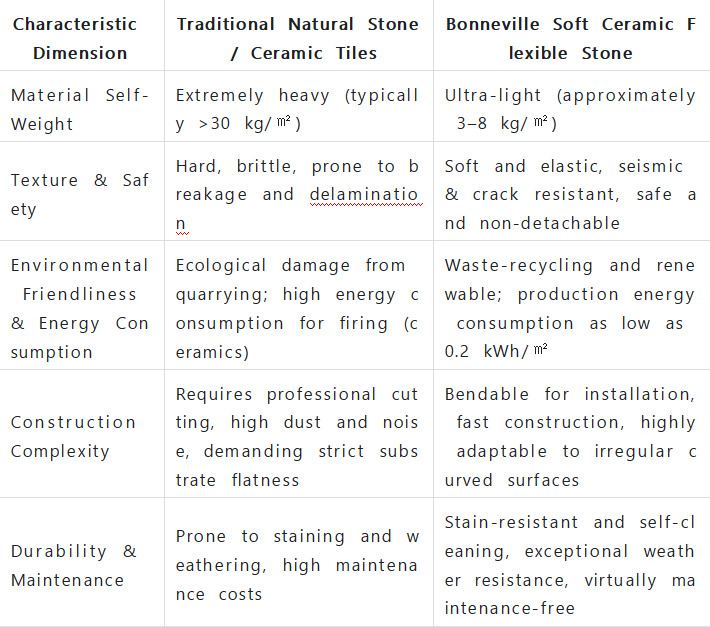
A direct comparison of key performance indicators between Flexible Stone Veneer and traditional stone or ceramic tiles vividly illustrates its revolutionary advantages.
05 Environmental Revolution
The advent of soft ceramic flexible stone in itself constitutes a green revolution in the building materials sector. Its raw materials are extensively sourced from urban construction waste soil, discarded cement blocks, ceramic waste, and other byproducts, realizing the resource-based recycling of solid waste. Its core production technology employs low-temperature irradiation cross-linking, with energy consumption of only approximately 0.2 kWh per square meter of product. Compared with the high-temperature kilns used in traditional ceramics, energy savings exceed 80%, resulting in a significant reduction in carbon emissions. At the end of its product lifecycle, the material can be physically reduced to powder, returning to nature or re-entering the production cycle, truly embodying the cradle-to-cradle concept of full-lifecycle ecology.
06 Wide Applications
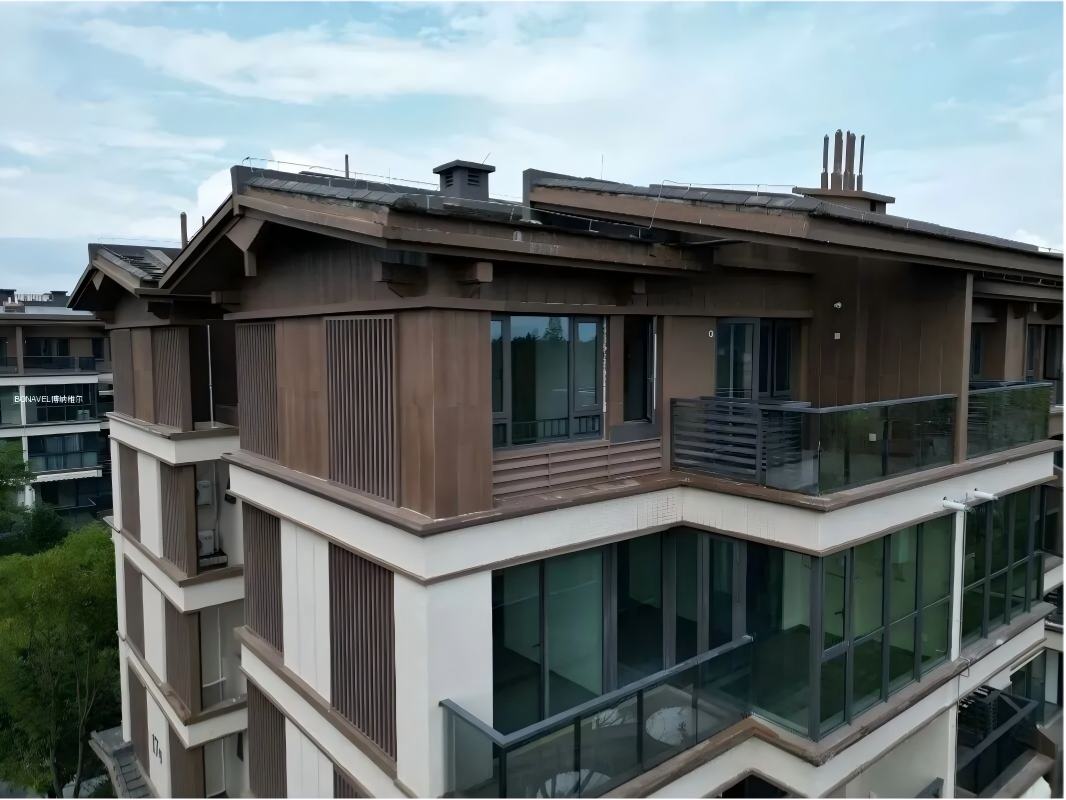
Thanks to its comprehensive advantages, the application scope of soft ceramic flexible stone is expanding rapidly. In urban renewal and old town renovation projects, it can be directly applied over existing wall surfaces, greatly reducing the cost of removing old finishes and the generation of construction waste, while quickly unifying the architectural appearance.
In various new buildings, it provides safe, durable and elegant stone-textured finishes for the exterior walls of residences, apartments and villas, as well as public facilities such as schools, hospitals, sports and cultural venues.
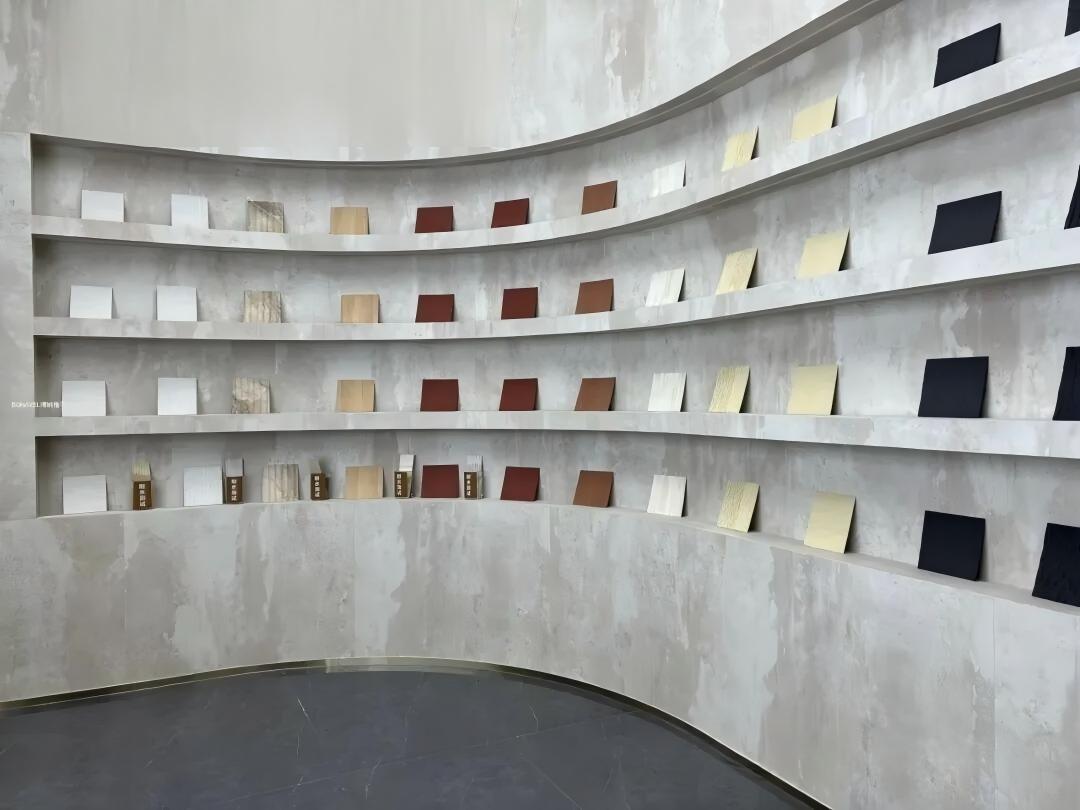
Its exceptional flexibility also enables it to perform excellently in highly design-oriented projects featuring curved walls, arched columns and irregular building facades, liberating the creative imagination of architects.