



The Middle East is entering an intensive phase of infrastructure construction.
Projects under Saudi Arabia’s Vision 2030 framework – including NEOM and the Red Sea tourism development – have moved from planning into construction. The Saudi construction market is expected to reach USD 88.5 billion in 2026, with total infrastructure investment exceeding USD 1.5 trillion over the next decade. The GCC building products market was valued at approximately USD 34.4 billion in 2025 and is projected to grow to USD 53.9 billion by 2034. The UAE construction materials market is growing at an annual rate of 7.5%–8.5%.
As construction scale expands, procurement standards are also rising. The Saudi SASO Green Building Code, the UAE Estidama Pearl Rating System, and the increasingly widespread LEED certification across the region have made low-carbon, recyclable materials a priority in large-scale tenders. The GCC sustainable building materials market was valued at USD 6.3 billion in 2025 and is projected to reach USD 13.4 billion by 2034.
In this market environment, the alignment between the product characteristics of Flexible Stone / MCM Materials and Middle Eastern procurement requirements is being recognised by more and more project owners.
I. Export Advantages of Flexible Stone in the Middle East
Transportation and Structural Advantages from Lightweight Properties
The total weight of Flexible Stone, including accessories, does not exceed 6 kg/m², with a thickness of only 2–6 mm. For the many high-rise buildings in the Middle East, this means exterior wall loads are significantly reduced, and the main structure does not require additional reinforcement. On the transportation side, a 20-foot container can load approximately 7,000 m² of Flexible Stone, while the same weight of natural stone can only load about 500 m² – a substantial difference in shipping costs.
Climate Adaptability
The Middle East’s high temperatures, intense solar radiation, and large diurnal temperature variations impose stringent requirements on architectural finishing materials. Flexible Stone maintains structural stability within a range of -30°C to 50°C, and offers UV resistance, acid/alkali corrosion resistance, and waterproof/moisture-proof performance. After 3,500 hours of aging testing, its exterior service life can reach 30 years, while quality stone-effect paint typically lasts only 5–6 years.
Green Certification Meets Procurement Thresholds
Flexible Stone’s production energy consumption is approximately 80% lower than traditional ceramics, with carbon emissions about one-sixth that of traditional ceramics, and cutting waste can be recycled. In 2025, Flexible Stone products officially obtained China Green Product Certification, and the standard for “Modified Inorganic Mineral Composite Building Decorative Sheets (Flexible Stone)” was issued and implemented. These certifications enable Flexible Stone to meet the scoring requirements for materials and resources in certification systems such as SASO and LEED.
Policy Window in the Egyptian Market
In December 2025, Egypt’s Ministry of Investment and Foreign Trade, together with the Ministry of Finance, released the 2026 building materials industry tariff adjustment plan, under which import tariffs on LEED-compliant green building materials were reduced from 20%–30% to 10%, effective from January 1, 2026. This policy opens a clear cost channel for Flexible Stone to enter the Egyptian market.
II. Production Capacity and Export Performance of Chinese Flexible Stone Factories
China is the world’s largest producer of Flexible Stone. In 2025, China’s Flexible Stone output reached 280 million m², accounting for 62.5% of global output, with a CAGR maintained at over 14%.
Export data is equally noteworthy. In 2025, Chinese Flexible Stone products were exported to more than 30 countries, with exports accounting for nearly 30% of total output. The Middle East and Africa region, driven by accelerating infrastructure development, saw demand growth of 18.1%, making it the fastest-growing emerging market globally.
Specific company performance provides further reference. Yibin Bonawell New Materials Co., Ltd. had zero overseas business in 2024; by 2025, its export revenue exceeded RMB 3 million; in the first half of 2026, it exported 200,000 m² of flexible stone materials, with sales reaching RMB 10 million. Its products now cover 36 countries across Southeast Asia, the Middle East, Europe, Africa, and the Americas. Jiangsu New Stone Age New Building Materials Technology Co., Ltd., with an annual Flexible Stone production project of 1.5 million m², currently has approximately 60% of its orders coming from international markets, primarily sold to Southeast Asia, the Middle East, and Central Asia, with a daily production capacity of approximately 3,000 m².
III. OlinMat’s Supply Chain Service Capabilities
For building material buyers, wholesalers, and project contractors in Egypt and the Middle East, directly connecting with Chinese factories presents several practical challenges: high supplier screening costs, lack of quality control standards, complex cross-border logistics coordination, and language barriers.
OlinMat positions itself as a source supply chain service provider for Chinese building materials. With a physical showroom and in-stock warehouse in Egypt, and backed by China’s supply chain system, we provide full-process support – from product selection, sampling, and ordering to logistics.
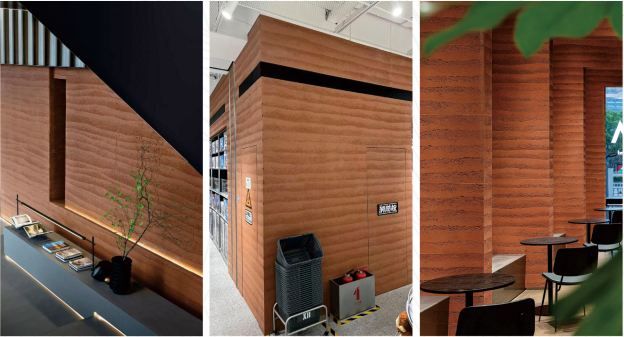
In terms of sourcing, OlinMat connects directly with quality Chinese Flexible Stone factories, covering mainstream texture series including Slate, Travertine, Rammed Earth, Dacite, Hemp Weave, and Bamboo Weave. Patterns and specifications can be customised according to project requirements.
In terms of quality, we provide third-party inspection and pre-shipment quality testing to ensure products meet the fire safety and environmental standards of the project’s host country.
In terms of delivery, our local showroom and in-stock warehouse in Egypt allow customers to view samples on-site and take immediate delivery, without waiting for a full sea freight cycle. From inquiry and sampling to order execution, our local team and China team work together to reduce information loss in communication.
In terms of category coverage, in addition to Flexible Stone, we can also source wall stickers, LVT flooring, vinyl woven carpet, smart locks, and other building material categories – suitable for contractors and wholesalers with multi-category procurement needs.
We have a showroom and in-stock warehouse in Egypt – building material buyers, wholesalers, project contractors, and design firms are welcome to visit, view samples, and discuss cooperation.
📩 Interested in procurement cooperation? Let’s talk!
📱 WhatsApp: +8613037926232
You can also leave a message on our website or send us an email – we will respond promptly. OlinMat looks forward to partnering with you to explore practical cooperation opportunities in the Middle East building materials market.