

A piece of "stone" that can bend is quietly changing the rules of the game in the architectural decoration industry. It carries the luxurious essence of natural stone while overcoming the critical flaws of traditional materials.
01 Market Pain Points: The Dilemma in Building Material Choice
The architectural decoration industry has long faced a dilemma: while stone paint is cost-effective and easy to apply, it lacks the three-dimensional texture and luxurious appearance of natural stone. Its service life is limited, often leading to fading and cracking within just a few years.
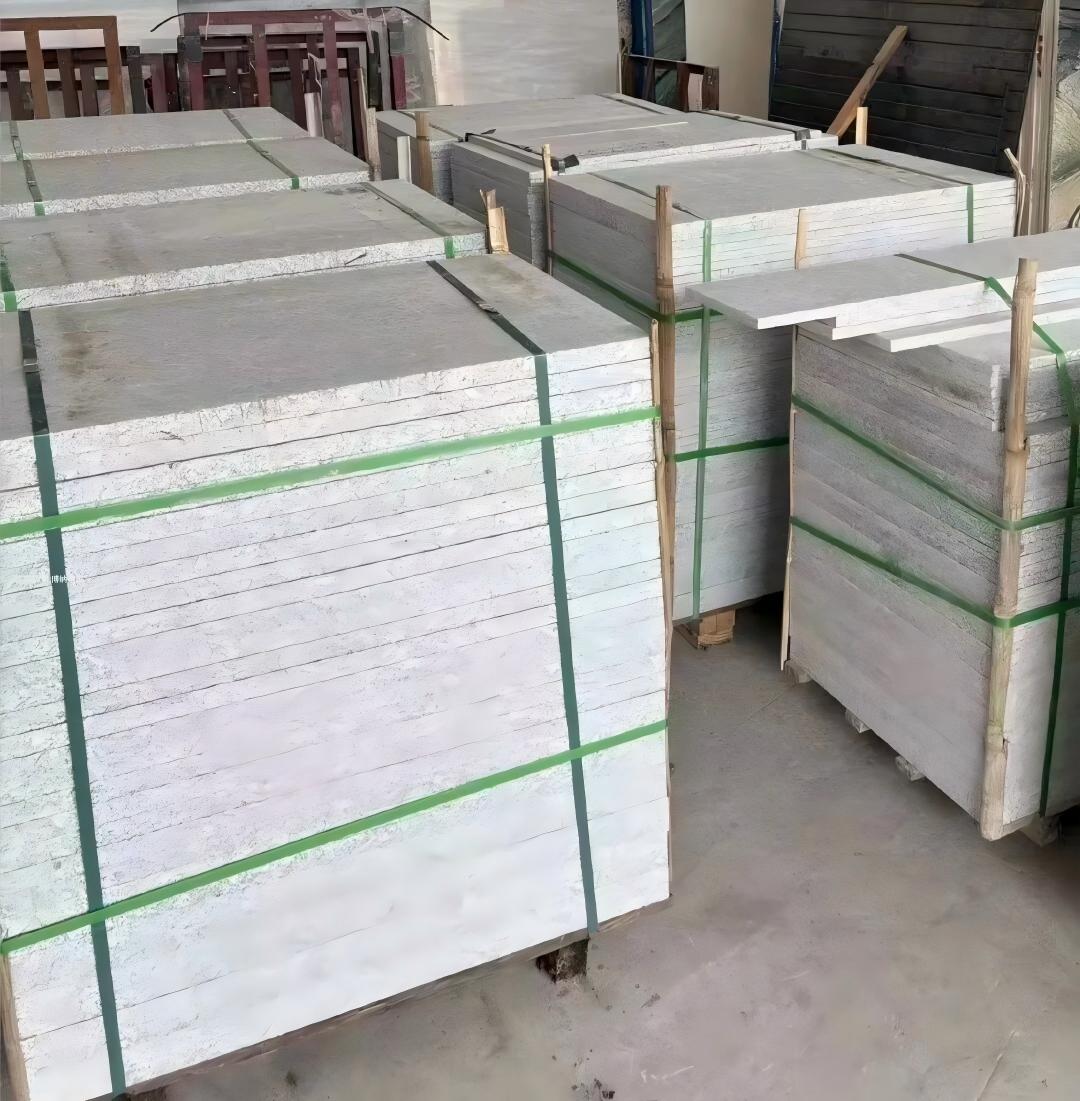
Traditional natural stone undoubtedly offers unparalleled texture and premium quality. However, its astonishing weight requires additional structural support, and its installation process is complex, time-consuming, and costly. More critically, natural stone also poses safety and environmental concerns.
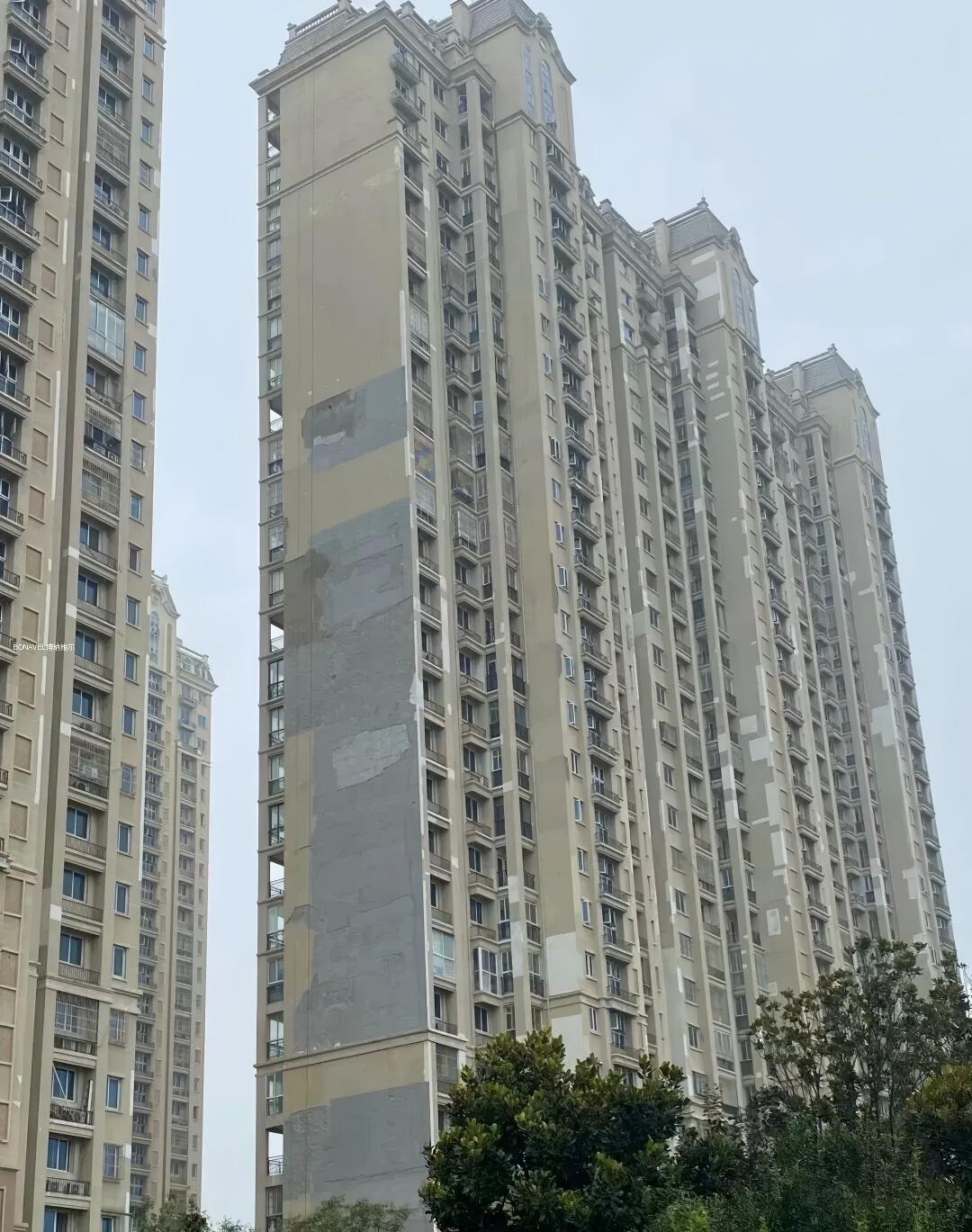
In recent years, incidents of exterior wall material detachment causing safety hazards have frequently made headlines. Against this backdrop, the market urgently demands a new material that can deliver the aesthetic appeal of natural stone while offering safety, cost-effectiveness, and environmental sustainability.
Flexible stone has emerged precisely under the dual drivers of market demand and technological advancement. It is not merely a substitute but a technological innovation that integrates multiple advantages.
PART 02 Comprehensive Comparison: A Full Evaluation of the Three Materials
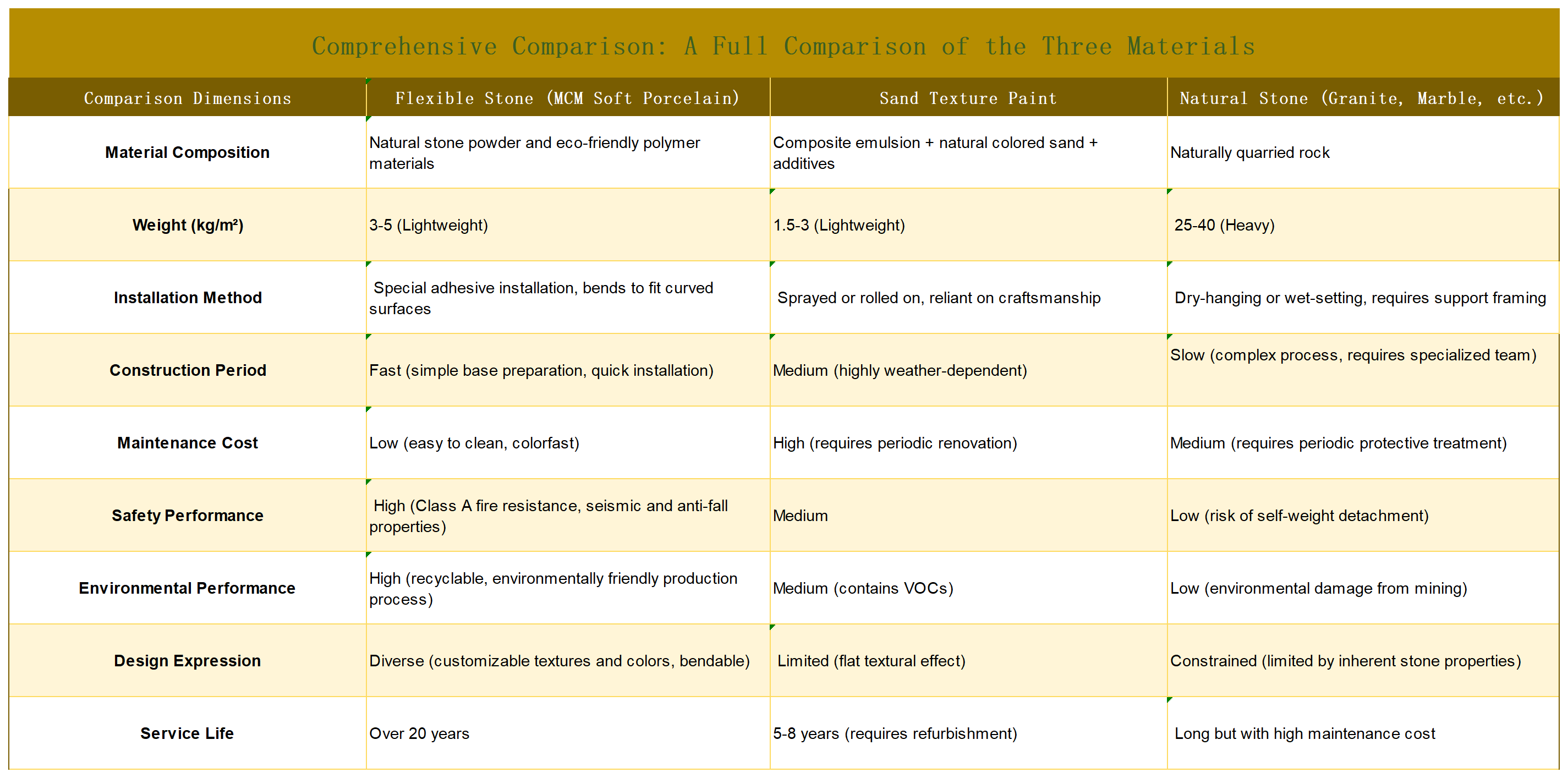 The comparison clearly shows that flexible stone holds distinct advantages in safety, construction efficiency, maintenance costs, and design flexibility. It successfully addresses the shortcomings of traditional materials while preserving their strengths.
PART 03 Traditional Limitations: The Shortcomings of Stone Paint and Natural Stone
The main issue with stone paint lies in its inconsistency in quality and performance:
Stone Paint: Low-grade variants last only 1–2 years, while higher-grade options endure 5–8 years, though eventual detachment inevitably adds secondary maintenance costs.
Sand-Textured Paint (e.g., water-based sand paint): Aging resistance can exceed 5,000 hours.
Natural Stone:
While natural stone boasts undisputed high-end texture, its heavy "burden" poses challenges for architects and developers:
A weight of 25–40 kg per square meter necessitates additional structural support for buildings.
The installation process is complex and time-consuming, requiring specialized teams and significant labor.
PART 04 Technological Breakthrough: Comprehensive Advantages of Flexible Stone
Innovative Material Science
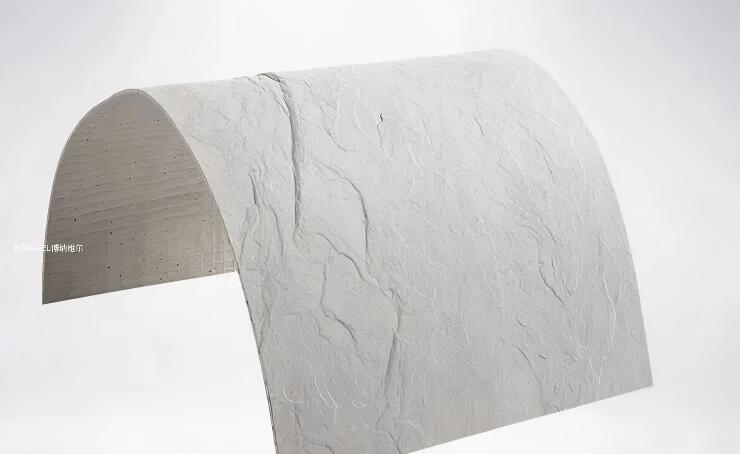
The core advantage of flexible stone stems from its innovative material science. It is not merely a superficial imitation but integrates the authentic surface of natural stone with eco-friendly polymer substrates through patented technology. This structure grants it the genuine texture and color of natural stone, with each piece being a unique natural masterpiece.
Achieving "Lightweight" Stone for Faster Installation
More importantly, flexible stone breaks free from the weight constraints of natural stone, achieving "lightweight luxury." In construction, it demonstrates unprecedented flexibility—it can bend to fit curved structures like columns and arches, offering architects greater design possibilities. The installation process is simple and efficient, eliminating the need for complex steel support structures.
Safety and Environmental Benefits of "Soft Porcelain Flexible Stone"
Safety is another highlight of flexible stone. Weighing only one-tenth of natural stone, it significantly reduces the risk of detachment. The product itself meets Class A fire resistance standards and does not release toxic gases under high temperatures. From a sustainability perspective, flexible stone production consumes low energy, avoids damage to natural landscapes, and the product is recyclable, aligning with green building trends.