

How to choose an outdoor power station? Mainly consider the following aspects:
1. Battery Capacity
It is recommended to choose a power station with large capacity to avoid frequent recharging. Of course, higher capacity also means a higher price.
2. Output Power
Before buying, understand the power or energy requirements of the devices you plan to run. This will determine which model can handle your load.
3. Battery Cells (Most Important)
Good battery cells provide overcurrent protection, overcharge protection, over-discharge protection, short-circuit protection, over-power protection, and over-temperature protection. High-quality cells last longer, perform stably, and are safer.
There are three mainstream lithium battery types: ternary lithium, lithium iron phosphate (LiFePO₄), and polymer lithium.
👉 Comparison: Lithium Iron Phosphate (LiFePO₄) cells last much longer.
Under normal conditions, ordinary lithium batteries lose usability after about 500 cycles, while LiFePO₄ batteries can be recharged over 2000 cycles, with a service life of 8+ years.
Moreover, LiFePO₄ batteries do not swell or explode over time, and they maintain stable discharge even under vibration or impact – much safer.
✅ Priority recommendation: Choose a power station with LiFePO₄ batteries. (Important: This type is generally more expensive, but the safety factor is significantly better.)
4. Charging Methods
When the power station is idle, you need to recharge it. Common options: AC wall outlet, car charger (12V/24V), and solar panels. Choose based on your needs.
5. Output Port Variety
Depending on your requirements, look for AC outlets, DC outlets (car port, DC barrel jacks), USB-A, USB Type-C with fast charging, wireless charging, built‑in lighting, etc.
Is an Outdoor Power Station Really Necessary?
Compared to ordinary portable power banks, the biggest feature of an outdoor power station is that it supports 220V AC output. A high-power unit can even power cooking appliances during camping trips, or charge an electric vehicle in an emergency – it is a fully featured “portable power plant.” At home, it provides stable backup power during blackouts or sudden outages, keeping lights, appliances, office equipment, and even cooking devices running without trouble.
How to Apply These Criteria? – Meet the Olinmat Mobile Power Station
Theory is one thing, but the real test is the product itself. After comparing many brands, the Olinmat mobile power station is built exactly to the safety standards described above – especially for users who demand uncompromising safety and durability.
🛡️ Core Safety: Automotive‑Grade LiFePO₄ Battery Pack
All Olinmat power stations exclusively use automotive‑grade LiFePO₄ cells – never cheaper ternary or polymer lithium. This isn’t just a spec difference; it’s a direct promise for your life and property safety.
Cycle life: >2500 cycles – far beyond the 500 cycles of ordinary lithium batteries. Used three times a week, it can serve you for over 10 years. Long‑term cost per use is actually lower.
No fire, no explosion – Olinmat cells pass the nail penetration test. Even under internal short‑circuit conditions, there is no thermal runaway. The (enclosure) is made of V0‑grade flame‑retardant material – double protection.
Wide temperature operation – from -20°C cold camps to 50°C desert trips. LiFePO₄ chemistry is naturally more stable than ternary lithium, which is prone to “thermal runaway.”
🧠 Smart BMS: 9 Layers of Hardware Protection
Good cells need an intelligent manager. Olinmat’s in‑house BMS chip monitors every cell in real time, covering all the protections mentioned earlier – overcurrent, overcharge, over‑discharge, short‑circuit, over‑power, over‑temperature – plus over‑voltage, under‑voltage, and cell balancing. The system responds in microseconds; if an anomaly is detected, power is cut within 0.05 seconds – more than 10 times faster than a conventional fuse.
⚡ Capacity & Power: Covers 95% of Outdoor Scenarios
Olinmat offers a full lineup from 300Wh to 2000Wh:
| Usage Scenario | Recommended Capacity |
|---|---|
| Weekend camping (1‑2 days) | 500‑800Wh – charges phone 20x, laptop 5h, 50W fridge 12h, LED light 40h |
| RV trip or home emergency | 1000‑1500Wh – can also run 600W rice cooker, 800W kettle, even a 1200W projector |
| Professional work / long‑term backup | 2000Wh – with solar panels, supports off‑grid power; can add ~10‑15km emergency EV range |
👉 Inverter quality: Olinmat uses a pure sine wave inverter. Rated output from 300W to 2000W, with 2x surge capacity for motor‑driven devices (e.g., fridge compressor, small drill). Safe for sensitive electronics like laptops and drone chargers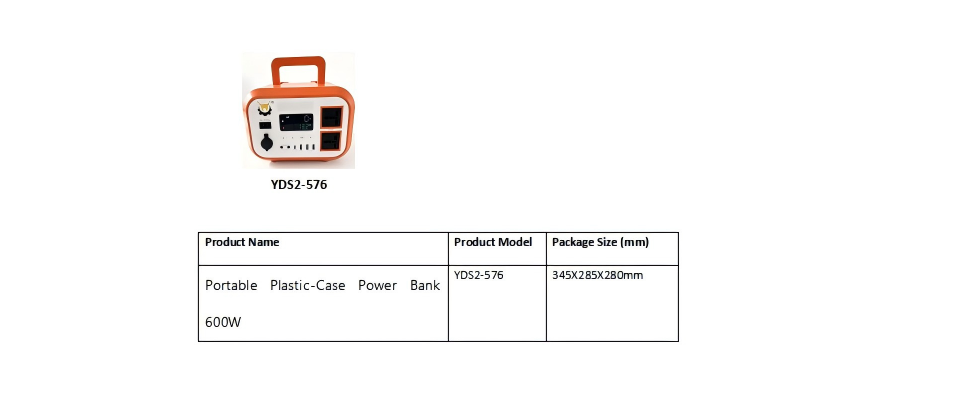
🔌 Charging Methods & Speed – No More Range Anxiety
Four flexible ways to recharge:
AC Fast Charging – 800Wh model fully charges in 1.5 hours; 2000Wh in about 3.5 hours. ~30% faster than many competitors.
Solar with MPPT – Pair with Olinmat 100W/200W foldable solar panels. Built‑in MPPT (Maximum Power Point Tracking) extracts up to 20% more energy than PWM, even on cloudy days.
Car Charging – 12/24V cigarette lighter port – charge while driving.
100W Dual USB‑C PD – Bidirectional 100W PD. Charge the power station via USB‑C, or fast‑charge a MacBook Pro directly.
🔌 Output Ports – One Station Does It All
The front panel offers:
2x 220V AC sockets (pure sine wave)
2x 100W USB‑C (PD3.0/PPS)
2x USB‑A fast charge (18W/22.5W, QC3.0)
1x car port (12V/10A)
2x DC5521 barrel jacks (12V/5A)
1x LED emergency light with SOS mode (120h runtime)
Real‑User Scenarios
Scenario 1: Weekend Camping
Mr. Li takes an Olinmat 800Wh + 100W solar panel. During the day, the panel charges the station. In the evening, he runs a 600W grill, charges phones, drone, and camp lights. He then watches a 2‑hour movie with a projector – 30% battery left.
Scenario 2: Home Blackout
Ms. Zhang’s old neighborhood often trips during summer. An Olinmat 1500Wh keeps the refrigerator, router, and fish tank aerator running. Everyone’s phones and tablets charge normally. Next morning, the frozen food is still solid, and the kids’ online classes are uninterrupted.
Scenario 3: Outdoor Construction
A work team uses an Olinmat 2000Wh to power drills, angle grinders, and a laser rangefinder. At lunch, they run a 500W electric kettle for noodles. Dust and vibration are no problem – the robust metal housing and internal battery cushioning keep everything stable all day.
Final Buying Guide: Safety Is Always the #1 Rule
Back to the original question: How to choose an outdoor power station? Remember this decision order:
First, choose the cell chemistry – Never buy anything other than LiFePO₄. If budget is tight, reduce capacity (e.g., from 1000Wh to 600Wh) rather than compromising on safety with ternary lithium.
Then calculate power – Add up the max power of all devices you might run simultaneously, then multiply by 1.5 to get the minimum rated output of the power station.
Next estimate capacity – Total energy (Wh) = sum of (device power × hours of use). Choose a capacity at least 30% higher than that total (to avoid deep discharges that shorten battery life).
Finally, check ports and charging methods – Ensure all your devices can plug in directly, and you have at least AC + solar as recharging options.
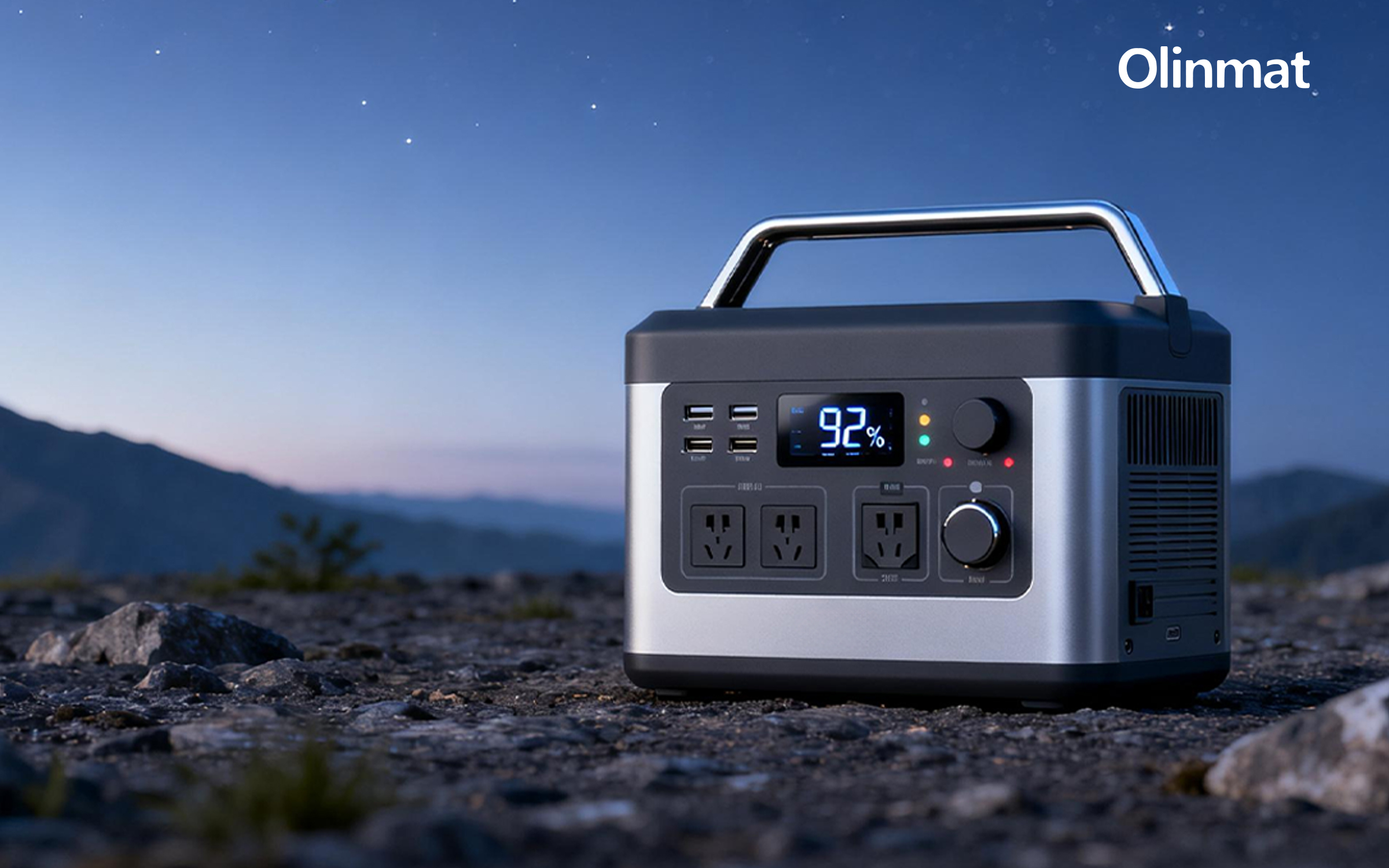
🔋 Olinmat mobile power stations stand up to the strictest scrutiny – they may not be the cheapest, but they are the most reassuring in their price class. Because you are not just buying a kilowatt‑hour or a few thousand watts – you are buying a 24/7 safety guardian that will serve you reliably for a decade.
Outdoor electricity – a matter of life and death. Don’t let your power station become a “moving bomb.” Choose Olinmat. Choose LiFePO₄. Choose genuine, trustworthy power.