

I. Overview of Saudi Arabia’s Construction Market and Building Material Demand
Saudi Arabia is the largest construction market in the Middle East. According to data from the Saudi General Authority for Statistics and industry sources, the size of the Saudi construction market reached approximately USD 88.5 billion in 2025. Driven by the Saudi Vision 2030 national strategy, the government continues to invest in infrastructure, affordable housing, new city developments, and large‑scale public projects, including NEOM, the Red Sea tourism project, and the Diriyah Gate development.
Saudi Arabia relies heavily on imported building materials. The country’s self‑sufficiency rate for construction products is limited, with about 70% of its building material demand met through imports. China is the largest source of building material imports for Saudi Arabia, and annual exports of products such as ceramic tiles, stone, aluminum profiles, and sanitary ware continue to grow. For newly emerging cladding materials like flexible ceramic thin plates (MCM flexible stone), the Saudi market is currently transitioning from initial awareness to growing demand — a clear first‑mover opportunity.
II. Product Attributes of Flexible Ceramic Thin Plates and Market Suitability
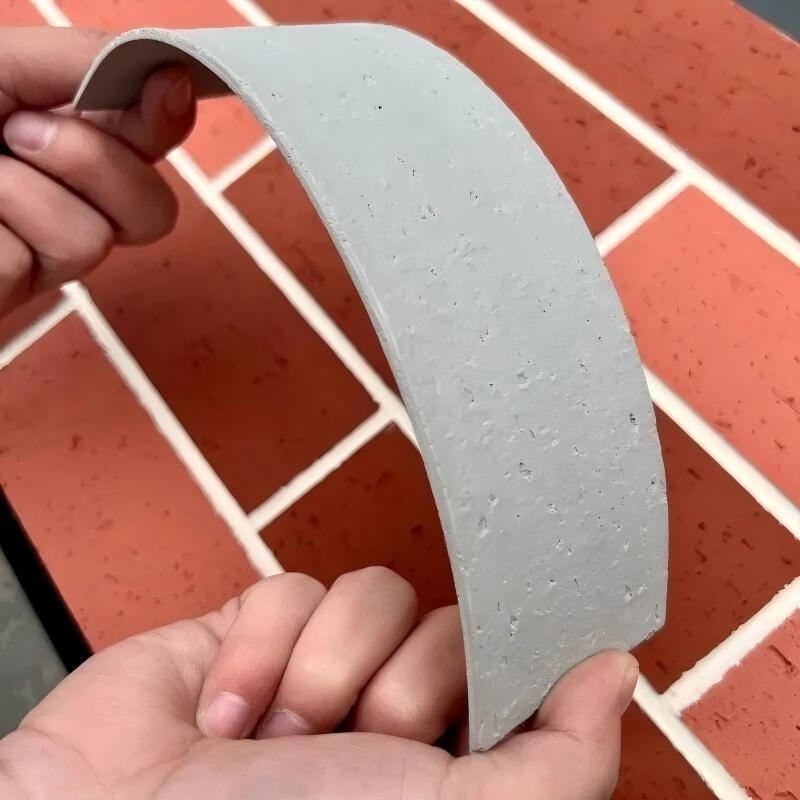
Flexible ceramic thin plates, commonly referred to as soft porcelain (MCM), are flexible architectural cladding sheets made primarily from modified inorganic powders through a compound modification and controlled‑temperature forming process. Typical thickness is 2–4 mm, and weight is 3–8 kg per square metre — about one‑quarter to one‑tenth the weight of conventional ceramic tiles.
Compared with traditional ceramic tiles, soft porcelain has the following characteristics:
Lightweight: reduces structural load, suitable for high‑rise building exteriors and renovation projects.
Flexible: bendable, accommodates substrate expansion/contraction due to temperature changes, reducing the risk of cracking and detachment.
Class A fire rating: meets fire safety requirements for high‑rise buildings.
Easy installation: can be directly bonded to various substrates; on old buildings, it can be applied directly over existing tiles without demolition.
Environmentally friendly: raw materials mainly consist of inorganic waste (e.g., construction site soil), low energy consumption during production.
Saudi Arabia has an arid climate with large day‑night temperature differences. Traditional ceramic tile facades often suffer from hollowing, cracking, and even falling off over time due to long‑term thermal movement and minor structural vibrations. The flexibility of soft porcelain directly addresses this weakness. In addition, Saudi Arabia is carrying out large‑scale urban renewal. Renovating old tile facades by conventional methods requires removal of the original cladding, taking a long time and generating significant demolition waste. Soft porcelain’s direct‑overlay installation can reduce renovation time to about 30% of conventional methods while lowering waste disposal costs.
III. Product Features of Olinmat Soft Porcelain and Export Readiness for the Middle East
Olinmat is a representative brand in the MCM soft porcelain sector. Its products are manufactured using mature processes and quality control systems, with quantifiable technical strengths in key parameters such as light weight, flexibility, fire resistance, and weather resistance.
1. Technical specifications
Thickness: 2–4 mm
Weight per square metre: 3–8 kg (approx. 6 kg including adhesive)
Fire rating: Class A
Flexibility: can be bent around a 200 mm diameter cylinder without cracking
Accelerated aging resistance: >2,000 hours
These specifications meet common international building material standards and provide a technical basis for passing Saudi‑required certifications.
2. Scenarios suited to Saudi market needs
High‑rise residential and office facades: lightweight, Class A fire‑rated, crack‑resistant.
Large public buildings (sports stadiums, hospitals, schools): high safety requirements; soft porcelain can simulate stone, clay brick, etc.
Old urban areas and existing building renovation: no need to remove original cladding, direct installation, minimal disruption.
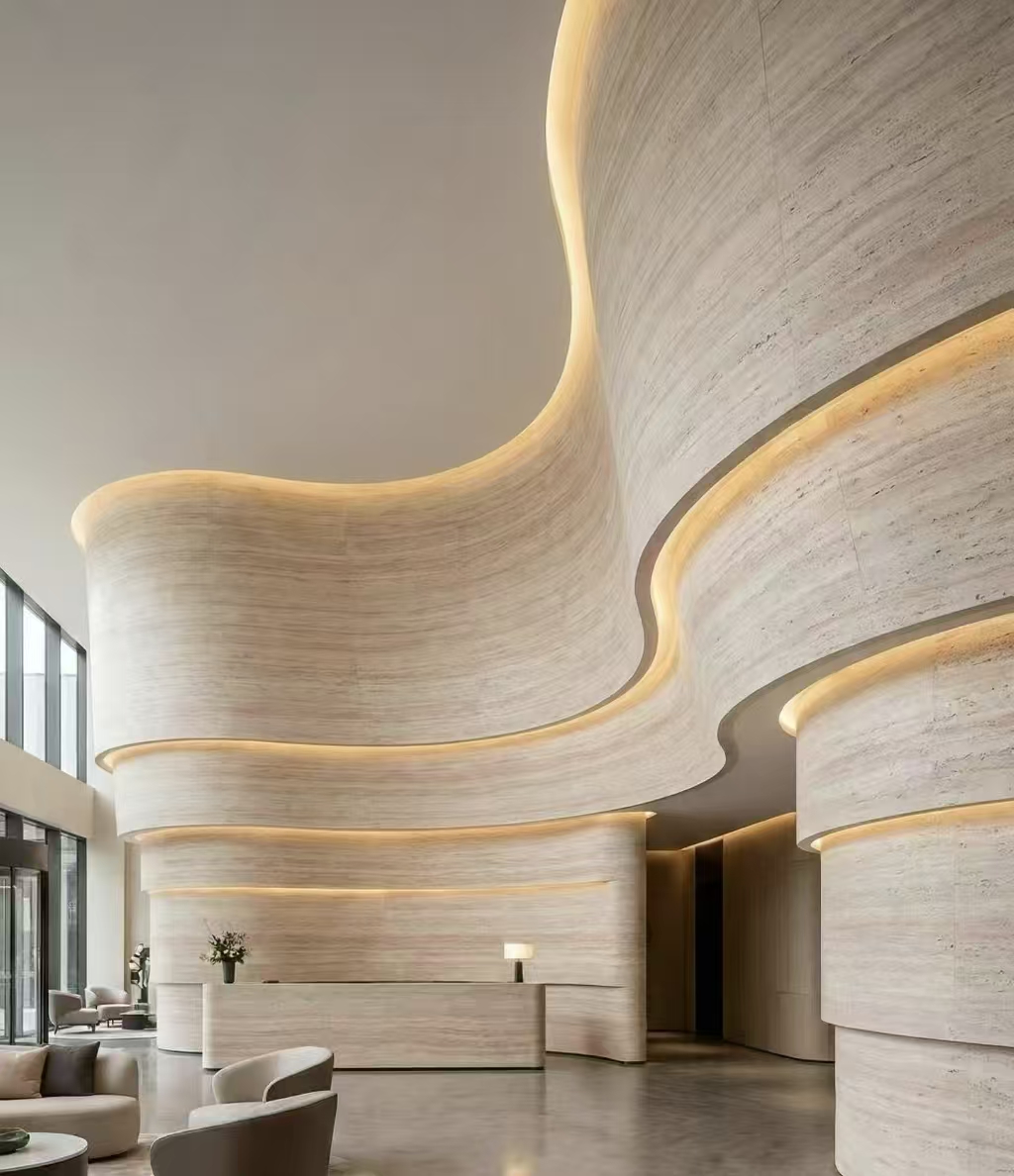
Resorts and tourism facilities: can simulate wood, bamboo, natural stone – a good match for projects like the Red Sea tourism area.
3. Logistics and packaging advantages for export to the Middle East
The lightweight nature of soft porcelain translates into meaningful cost benefits in export logistics. In a standard 40‑foot container, conventional ceramic tiles load about 22–25 tonnes, whereas soft porcelain loads only 6–8 tonnes. Although the value per container is relatively lower, transport costs based on volume and weight are still competitive. Soft porcelain can be packed in standard wooden crates or pallets with shrink wrap, which is moisture‑resistant and pressure‑resistant, suitable for ocean freight and port handling in Saudi Arabia.
IV. Saudi Import Compliance: SABER Certification and Procedures
Exporting to Saudi Arabia requires product conformity certification through the SABER platform. SABER is operated by the Saudi Standards, Metrology and Quality Organization (SASO). Since 2025, the old “letter of undertaking” clearance method has been abolished, and the new SABER rules are fully enforced.
For soft porcelain building materials, the standard export process is as follows:
1. Determine the HS code and register on SABER
Soft porcelain is generally classified under a code similar to other articles of stone or ceramic. Before exporting, it is advisable to confirm the applicable 12‑digit HS code (Saudi Arabia adopted 12‑digit codes in 2025) with the Saudi importer or a professional certification agent. Registration on the SABER platform is done by the importer; the exporter provides product information and technical documents.
2. Apply for a Product Conformity Certificate (PCoC)
Required documents: product technical specifications, third‑party test reports (fire resistance, flexibility, aging resistance, etc.), manufacturer’s qualifications.
Test reports must be issued by an accredited laboratory. For key items such as Class A fire rating and artificial aging, it is recommended to complete tests in China before export.
The PCoC is valid for one year. During this period, the same product can be shipped multiple times.
3. Apply for a Shipment Conformity Certificate (SCoC) for each shipment
Before each shipment, the importer applies for an SCoC on the SABER platform based on a valid PCoC.
Upload commercial invoice, packing list, and other documents.
The SCoC is for single use and must be applied for per shipment separately.
4. Customs duties and VAT
GCC common customs duty: 5%
Value‑added tax (VAT): 15%
5. Important considerations
Labelling: Both product packaging and the product itself must be marked “Made in China”.
Document consistency: The SCoC, invoice, and packing list must have identical product names, quantities, and HS codes.
Higher inspection rate: Saudi Customs has a medium‑to‑high inspection rate for building materials. Exporters should keep technical data sheets and original (or electronic) copies of third‑party test reports available with the shipment for random checks.
V. Other Compliance Requirements and Localisation Suggestions
1. Saudi Green Building Rating System (Mostadam)
Saudi Arabia is promoting the Mostadam green building rating system, which gives weight to the environmental attributes of building materials. Olinmat soft porcelain uses recycled inorganic waste as raw material and has low production energy consumption, giving it potential to earn points under Mostadam. For projects targeting a Mostadam star rating, it is advisable to provide a carbon footprint assessment or environmental declaration for the product before export.
2. Local content requirements
The Saudi government plans to raise the local content of building materials to 60% by 2030. For Chinese building material companies wishing to develop a long‑term presence in Saudi Arabia, it may be worth considering setting up a light assembly line in partnership with a local Saudi company, or establishing local warehousing and distribution, to mitigate future pressure from local content policies.
3. Local partnerships and technical support
Saudi customers value long‑term relationships and proven references. It is recommended that Olinmat find a Saudi distributor or agent with construction‑related qualifications to provide samples, installation guides, and detail drawings. After completing two or three local reference projects (e.g., hotels, public buildings, or residential facade renovations), market acceptance will increase significantly.
VI. Summary of Market Entry Pathways
Combining Saudi market demand and compliance requirements, the following pathways are available for Olinmat soft porcelain exports to Saudi Arabia:
Certification first: Complete testing for key parameters in advance, and assist the Saudi importer in obtaining the PCoC.
Target mid‑to‑high‑end projects: Focus on affordable housing facades, large public buildings, tourism real estate, and other project types with clear demand for lightweight, fire‑resistant cladding.
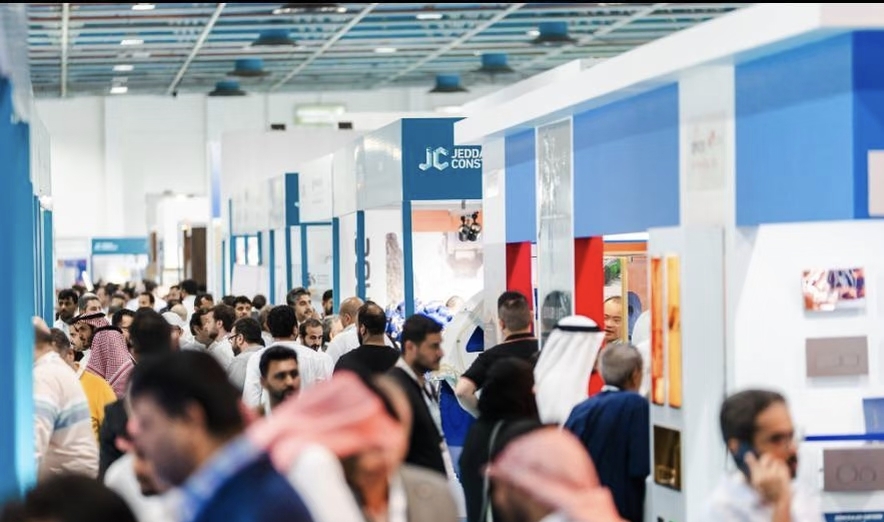
Exhibitions and in‑person meetings: Participate in The Big 5 Saudi, Saudi Build, and other local trade fairs to directly reach buyers.
Set up local display and stock points: Work with building material distributors in Riyadh, Jeddah, or Dammam to provide physical samples and limited local stock, shortening customer decision cycles.
Keep compliance up to date: Monitor policy updates on the SABER platform to avoid clearance delays caused by expired certification versions or HS code changes.

The Saudi Arabian market for flexible ceramic thin plates is entering an upward phase from initial awareness to broader application. In this market, MCM soft porcelain products — lightweight, flexible, fire‑resistant, and easy to install — offer clear technical substitution value. Olinmat soft porcelain, with its mature performance specifications and export readiness, can systematically enter the Saudi market on a compliant basis. The key lies in doing three things well: product certification, local project execution, and after‑sales support, thereby achieving orderly export growth.