



The evolution of traditional smart locks has been relatively clear: from passwords to fingerprints, from fingerprints to facial recognition, and from single‑modality to multi‑modal authentication. But as this path reaches its current stage, a deeper question emerges: when a lock can recognise you as the homeowner, can it also understand why you are coming home at this particular time, who is standing outside the door, and under what circumstances it should activate its defences? This is precisely the core challenge driving the current evolution of smart lock technology – the shift from a “tool for identity verification” to an “intelligent agent for spatial awareness”.
1. Visual Intelligence: From Recognising “Who” to Understanding “What”
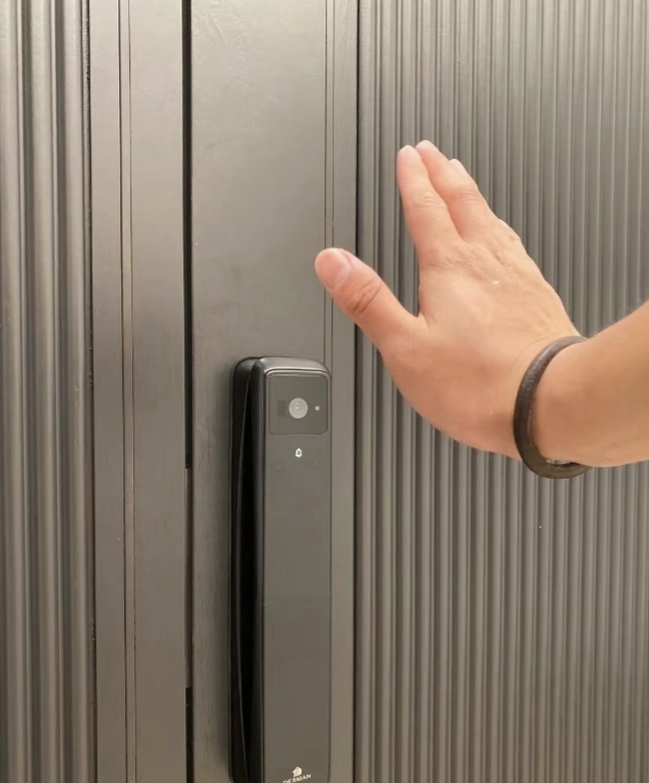
For years, the application of biometrics in smart locks has focused primarily on one question: “who is opening the door”. Fingerprint matching, facial comparison, vein verification – all essentially address the same problem. However, next‑generation smart locks are moving beyond this. With the maturity of image sensor technology, embedded AI and edge computing, visual intelligence is becoming a core design capability for smart locks. Unlike traditional smart locks, next‑generation video smart locks integrate a camera, locking mechanism and intelligent functions into a single device. They not only provide keyless entry, but also incorporate real‑time visual monitoring and intelligent analytics, transforming from a simple access controller into a device capable of doorstep surveillance and event awareness.
The significance of this shift is profound: smart locks are beginning to acquire “scene understanding”. At the 2026 launch of AI Smart Butler 2.0, one leading brand demonstrated a system that uses multi‑modal recognition to analyse behaviour at the doorstep – accurately distinguishing between a delivery person, a neighbour passing by or a potential threat – and enabling scenario‑based features such as “contactless parcel collection”. Even more notably, such systems already allow users to define custom labels for different people, automatically learning and distinguishing between various roles at the door, building a private visitor profile that enables “familiar faces, no alert” and rapid retroactive retrieval.
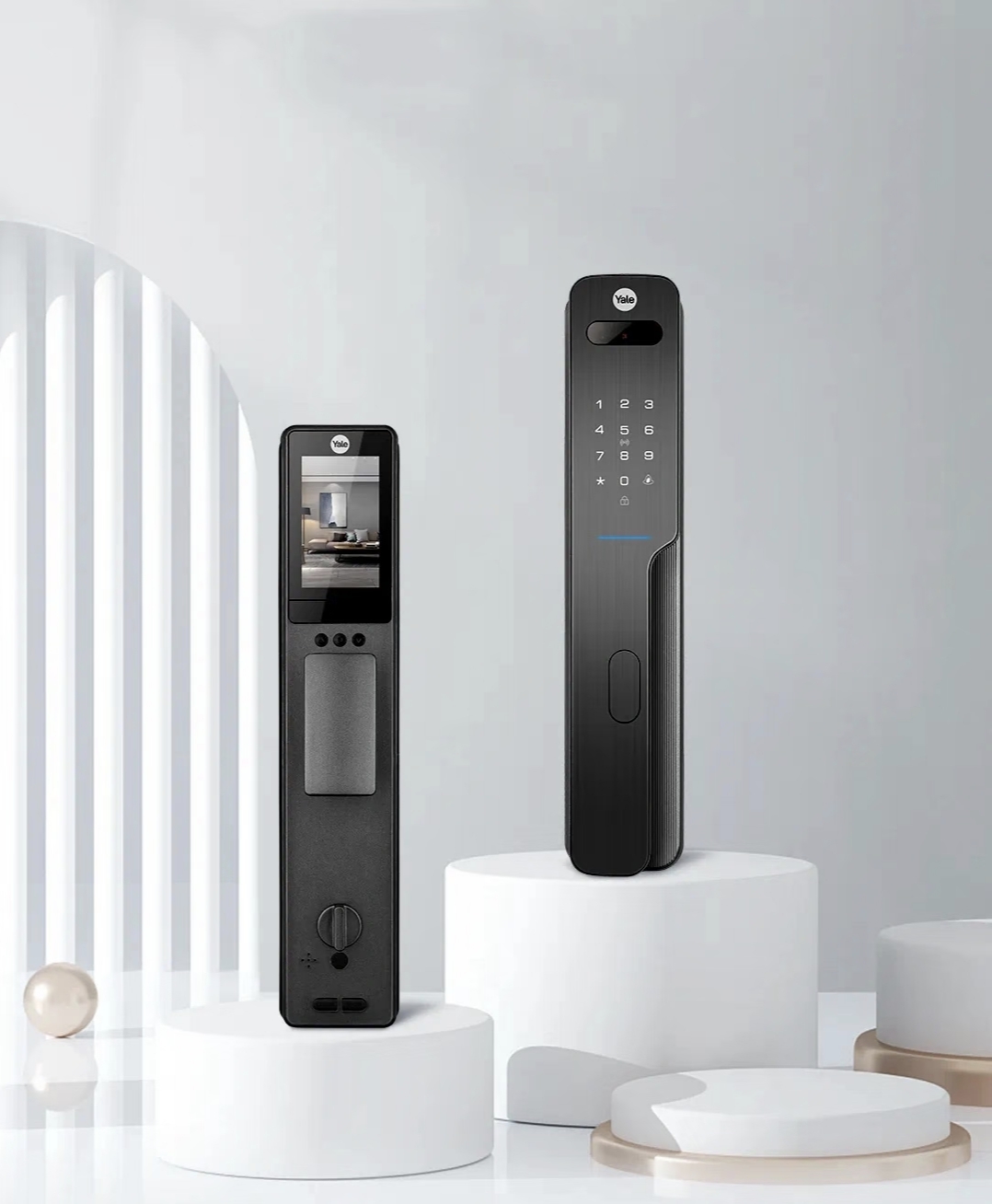
From a technical perspective, the key to achieving this capability lies in the synergy between sensors and AI algorithms. Image quality directly affects the accuracy of subsequent actions, while battery power and the compact form factor impose stringent low‑power requirements – these constraints define the technical depth of visual intelligence, meaning that not every AI‑tagged smart lock possesses the same level of scene perception. Only products that can truly deliver on this technical dimension are qualified to speak of “intelligence”.
2. From Passive Security to Active Defence: The Decision‑Making Leap of AI
If visual intelligence gives smart locks the ability to “sense”, then the evolution of AI decision‑making endows them with the intelligence to “judge”.
Current AI‑driven smart locks are undergoing a critical transition: from passive recording to active warning. The system not only logs events at the doorstep, but also performs real‑time scene analysis based on deep learning algorithms – detecting anomalies such as tailgating or lock‑prying and triggering an alert within a very short time. AI self‑evolving algorithms allow the lock to continuously learn and adapt to changes in family members’ appearances, so that a child’s growth does not require repeated fingerprint or face enrolment – the lock truly “gets better with use”.
What is even more remarkable is that AI is turning the smart lock from a standalone device into the decision‑making hub of a home security system. By analysing the user’s behaviour patterns and access habits, the system can dynamically adjust the security level – activating stricter monitoring when the user leaves home and lowering false‑alert thresholds when family members return. One interesting illustration from the industry is a motor system that automatically adjusts its torque in nine levels according to the state of the door lock – high torque to handle a sticky door, low torque for whisper‑quiet operation. AI is making decisions not only at the security level but also at the physical execution level.
But the true value of AI decision‑making lies not in automation per se, but in “selective automation”. The system needs to know when to grant access, when to ask for confirmation, and when to raise an alarm. This graded judgement ability is the key marker of a lock’s transition from “functional” to “cognitive”.
3. Privacy and Trust: Edge AI Redefines the Security Baseline
The widespread adoption of biometric technology has brought with it an industry‑wide dilemma: how should users’ biometric data – fingerprints, facial images, vein patterns – be stored and processed?
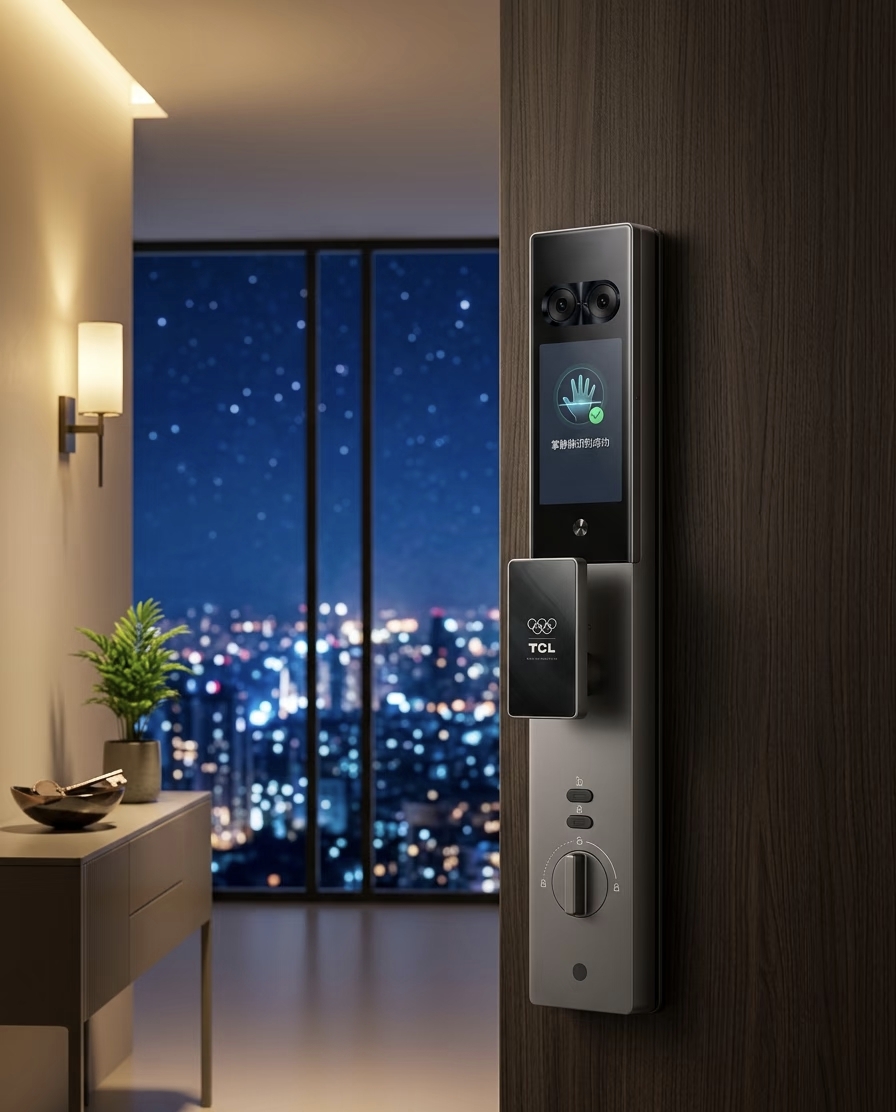
Traditional cloud‑dependent approaches face two problems: security risks during data transmission and storage, and consumers’ natural distrust of sending biometric data to the cloud. This issue is particularly acute in regions such as the Middle East, where privacy compliance is highly valued. At MWC Barcelona 2026, a notable solution was demonstrated: combining on‑edge AI facial recognition with UWB smartphone proximity detection, so that all biometric data is processed entirely on local hardware and never sent to the cloud. The core logic is simple: an authorised face plus UWB proximity confirmation – both conditions must be met to trigger unlocking; a single factor alone leaves the lock locked. The user’s biometric data never leaves home.
From a technological evolution perspective, on‑edge AI processing is becoming a key differentiator for premium smart locks. Research has proposed multi‑modal biometric systems that use deep image priors for pre‑processing, lightweight CNNs for feature extraction, and edge computing for real‑time deployment. On the encryption front, end‑to‑end encryption using AES‑256 or China’s SM4 algorithm is becoming standard, ensuring that unlock commands and biometric data are not intercepted during transmission. More advanced solutions have begun adopting “physically unclonable function (PUF) security chips” – each chip is manufactured with an unclonable physical fingerprint, providing hardware‑level protection against cloning attacks.
The high‑end hotel market in the Middle East has responded particularly positively to this trend. The Atlantis Hotel in Dubai has already procured fully concealed smart locks with a marble texture finish, using UWB phone proximity communication to automatically authorise check‑in, with a unit price premium eight times that of conventional products. This shows that in premium scenarios, users are willing to pay a significant premium for higher security standards and privacy protection – and Olinmat’s strategic positioning in this technology direction will be a key asset for entering the Middle East’s high‑end hotel renovation market.
4. Olinmat’s Technology Path and Middle East Market Adaptation
For Olinmat, the technology trends described above are not distant industry indicators, but competitive elements that can be directly translated into product advantages.
In Middle East hotel renovation scenarios, smart locks face three core challenges: maintaining the stability of biometric sensors under extreme high‑temperature conditions, completing installation without disrupting hotel operations, and meeting the region’s strict data privacy requirements. Olinmat’s product positioning is clear – to deeply integrate cutting‑edge AI and biometric technologies with the actual needs of the Middle East market.
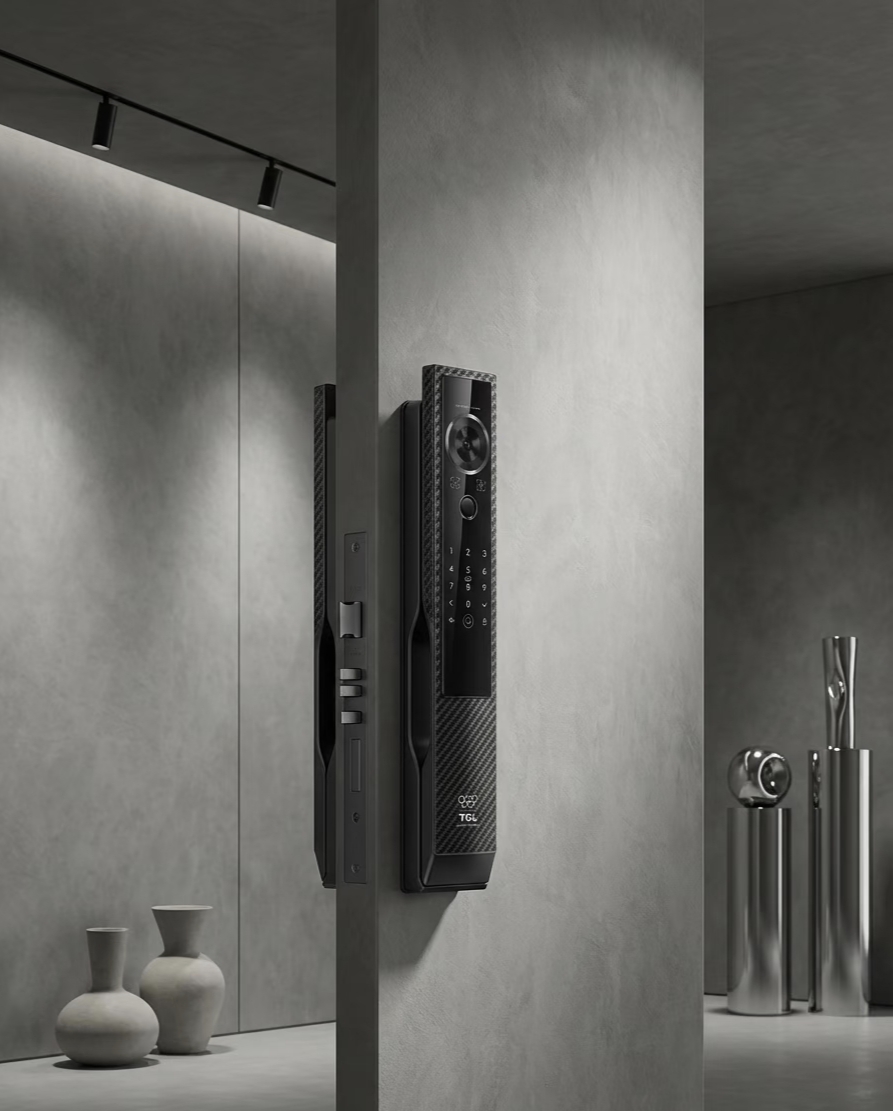
On the technology roadmap, Olinmat is focusing on three key directions: first, multi‑modal biometric fusion – using 3D facial recognition combined with palm vein verification to maintain high accuracy in complex environments; second, on‑edge AI processing architecture – ensuring that biometric data is computed locally to meet privacy compliance requirements; and third, ultra‑low‑power design – adapting to the practical constraints of hotel renovation projects in the Middle East where frequent battery changes are not feasible. These technology investments and market insights form the core of Olinmat’s strategy to build a differentiated competitive moat in the Middle East smart lock market.

The deep integration of AI and biometrics is driving the smart lock industry from the “era of recognition” into the “era of cognition”. Three technological dimensions – perception, decision‑making and security – are evolving in parallel. In perception, visual intelligence allows locks to “see” and understand the scene at the doorstep. In decision‑making, AI empowers locks with graded judgement and active warning capabilities. In security, edge computing and hardware‑level encryption are redefining the baseline for privacy protection.
For hotel renovations, high‑end residential properties and smart communities, the value of a smart lock is expanding from “access control” to “the first touchpoint of spatial intelligence”. It is no longer just a security device, but a sensory endpoint that understands user behaviour, anticipates potential risks and orchestrates the smart home ecosystem. Olinmat will continue to focus on this technological paradigm shift, delivering trustworthy smart security solutions for the Middle East market through product excellence.
Olinmat Smart Locks – defining a new frontier in security with AI.