



As the construction industry moves toward green and low‑carbon development, the logic behind facade material selection is being redefined. In the past, "heavy" and "rigid" were the default labels for wall materials – the weight of stone, the hardness of tiles, seemed to naturally represent quality and durability. But as building heights continue to rise and renovation demand steadily grows, the value of "lightness" and "flexibility" is increasingly being recognised.
I. Lightweight: 3‑8 kg/m² – Subtracting from Building Loads
There is a simple physical law in the construction industry: the heavier the exterior wall, the higher the structural cost.
Traditional natural stone dry‑hung systems carry a total load of approximately 80‑100 kg/m². Traditional ceramic tiles also carry significant self‑weight, and due to the substantial difference in thermal expansion coefficients between rigid tiles and concrete walls, they are highly prone to hollowing, cracking, and even large‑scale detachment. Stone‑effect paints are lightweight but lack durability, with a typical service life of only 5‑8 years.
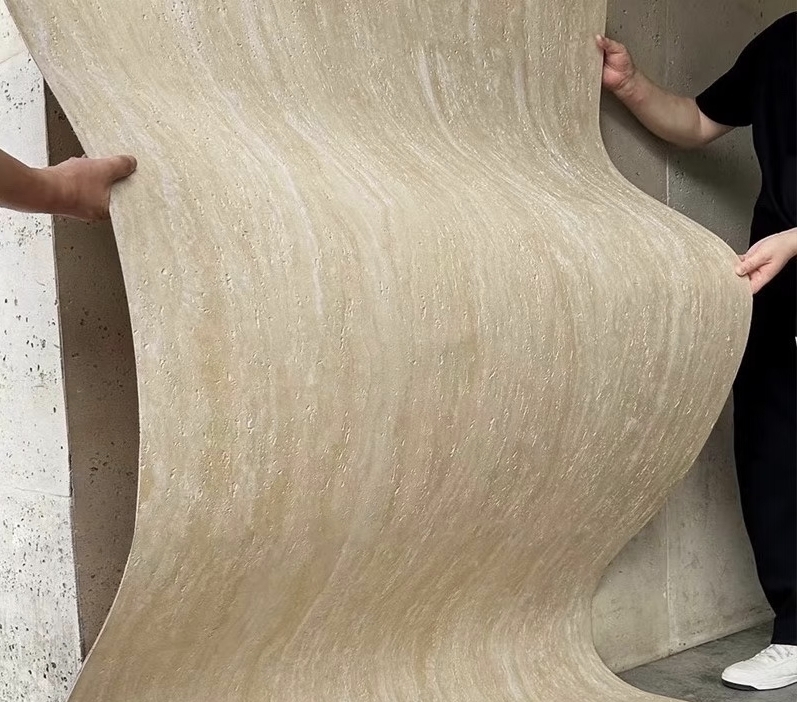
MCM soft stone offers a completely different number: 3‑8 kg/m². Including accessories, the total weight does not exceed 6 kg/m². What does this number mean? It means it can be cut with scissors or a utility knife, and installation requires no large amounts of cement mortar; it means transport costs can be reduced to one‑tenth of stone; it means no additional structural reinforcement is needed for high‑rise applications.
Even more noteworthy is its "hidden" structural cost saving. For a 100,000 m² high‑rise residential building, switching to MCM soft stone reduces the exterior wall self‑weight by approximately 1,300 tonnes. These savings do not appear directly in the facade budget but are reflected in the main structure's steel reinforcement and foundation works.
II. Green DNA: A Low‑Carbon Closed‑Loop from Production to Recycling
If lightweight is MCM soft stone's "physical advantage," then environmental friendliness is its "chemical identity."
The production process of MCM soft stone is fundamentally different from that of traditional tiles. Traditional tiles require high‑temperature firing at over 1,200°C. MCM soft stone uses 180°C low‑temperature curing and irradiation cross‑linking technology, reducing energy consumption by over 70% and carbon emissions by 80% . The production process achieves zero waste gas, zero wastewater, and zero dust.
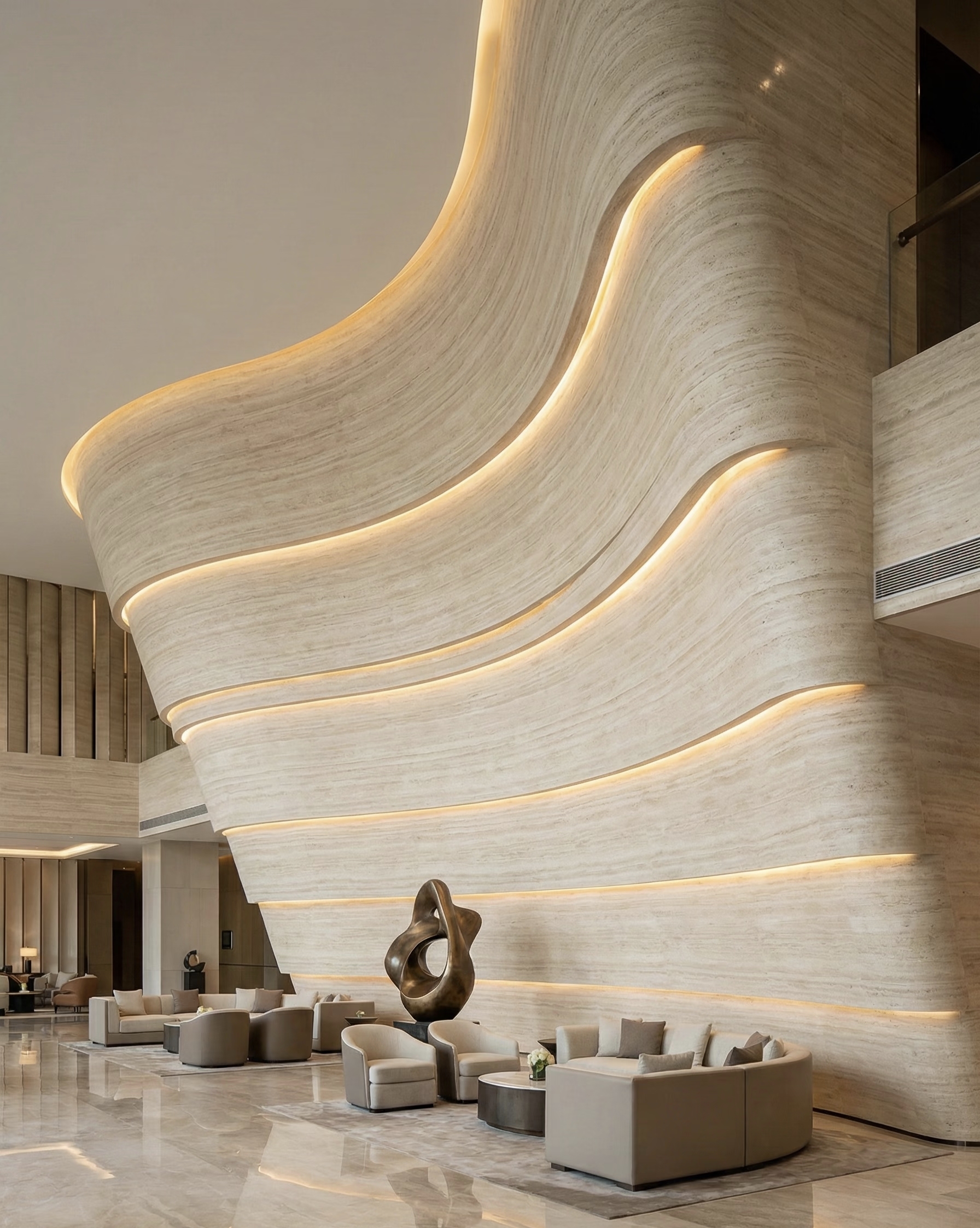
More importantly, there is the "green identity" of its raw materials. MCM soft stone uses inorganic materials such as urban construction waste soil, tailings powder, stone powder, and ceramic waste as its primary raw materials, with inorganic mineral powder content reaching as high as 80% . At the end of its service life, the material can be reduced to powder and returned to nature, or enter the next production cycle – from "construction waste" to "building material" – forming a complete circular economy loop.
In 2025 , MCM soft stone officially received China Green Product Certification , and the "Modified Inorganic Mineral Composite Building Decorative Sheet (MCM Soft Stone)" standard was issued and implemented. From a "conceptual" new material to a mature building material with clear standards to follow , MCM soft stone has completed an identity upgrade.
III. Breathability and Durability – The Technical Logic Behind the Micro‑Porous Structure
MCM soft stone has another easily overlooked but extremely important property: breathability.
When ordinary tiles and stone are applied, moisture trapped inside the wall cannot escape, leading over time to mould growth, hollowing, and detachment. MCM soft stone's micro‑porous structure provides a solution – it is both water‑repellent and breathable. Its water vapour transmission rate can reach 0.94 g/(m²·h) , with water absorption of only 193 g/m² . During southern China's humid "hui nan tian" (returning south moisture) or plum rain seasons, the wall can breathe freely and release moisture , fundamentally eliminating mould growth and condensation.
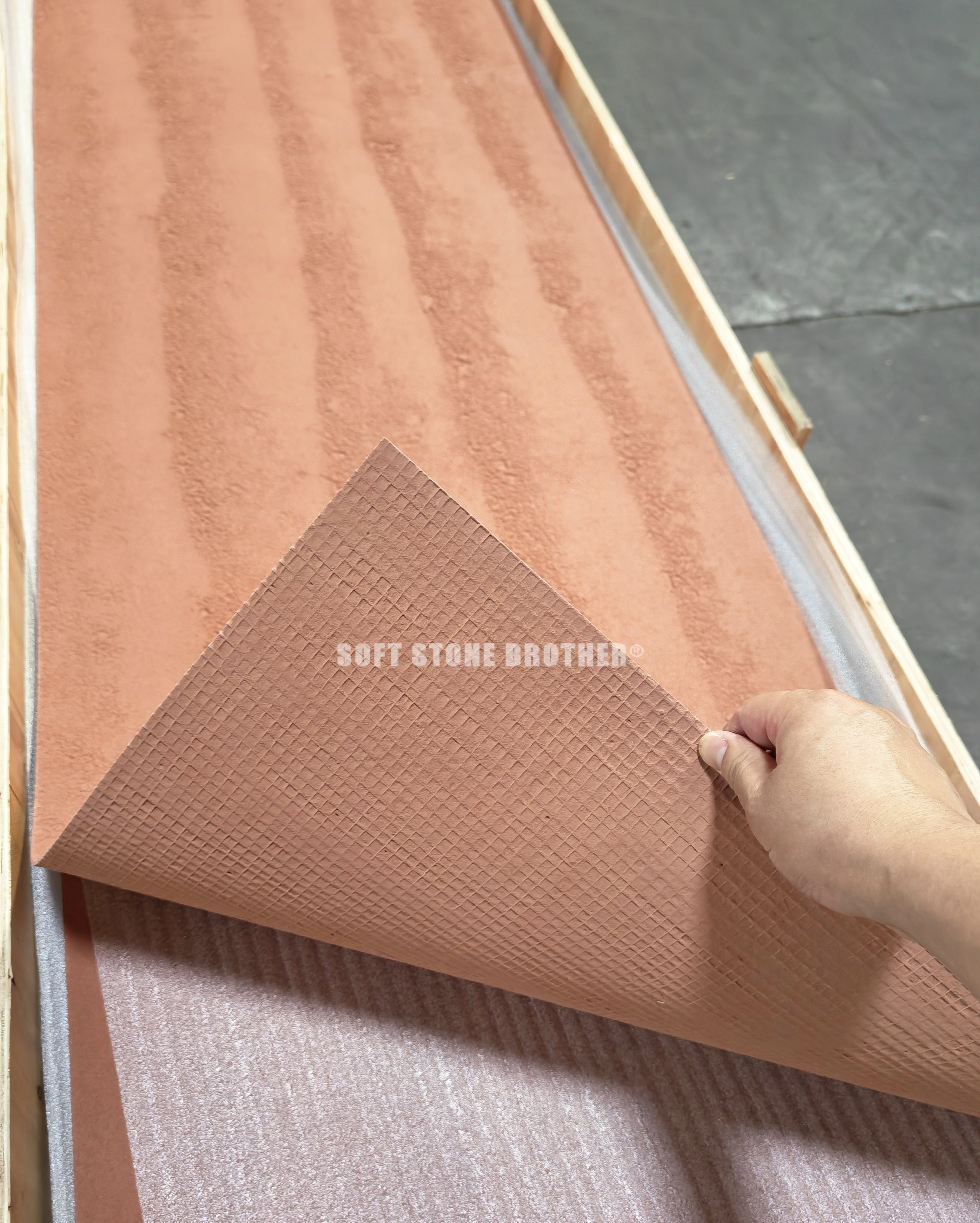
In terms of durability, MCM soft stone is equally impressive. It has passed 3,500 hours of accelerated weathering testing – equivalent to 50 years of natural service life. It also withstands 100 freeze‑thaw cycles between ‑40°C and 80°C without powdering or peeling. Its Class A fire rating ensures no sustained combustion when exposed to open flames.
IV. Practical Applications: The "Soft" Power in Renovation and New Construction
MCM soft stone's "lightness" and "flexibility" translate into tangible efficiency gains in real projects.
In the renovation sector, MCM soft stone can be applied directly over old wall surfaces – without removing existing paint, tiles, or mosaics. In traditional renovation projects, 30% of the construction schedule is consumed by the removal of old wall finishes. MCM soft stone eliminates demolition and waste removal, and the installation process generates no noise and no dust – achieving "silent renewal." Some renovation case studies show project schedules shortened by as much as 90% .
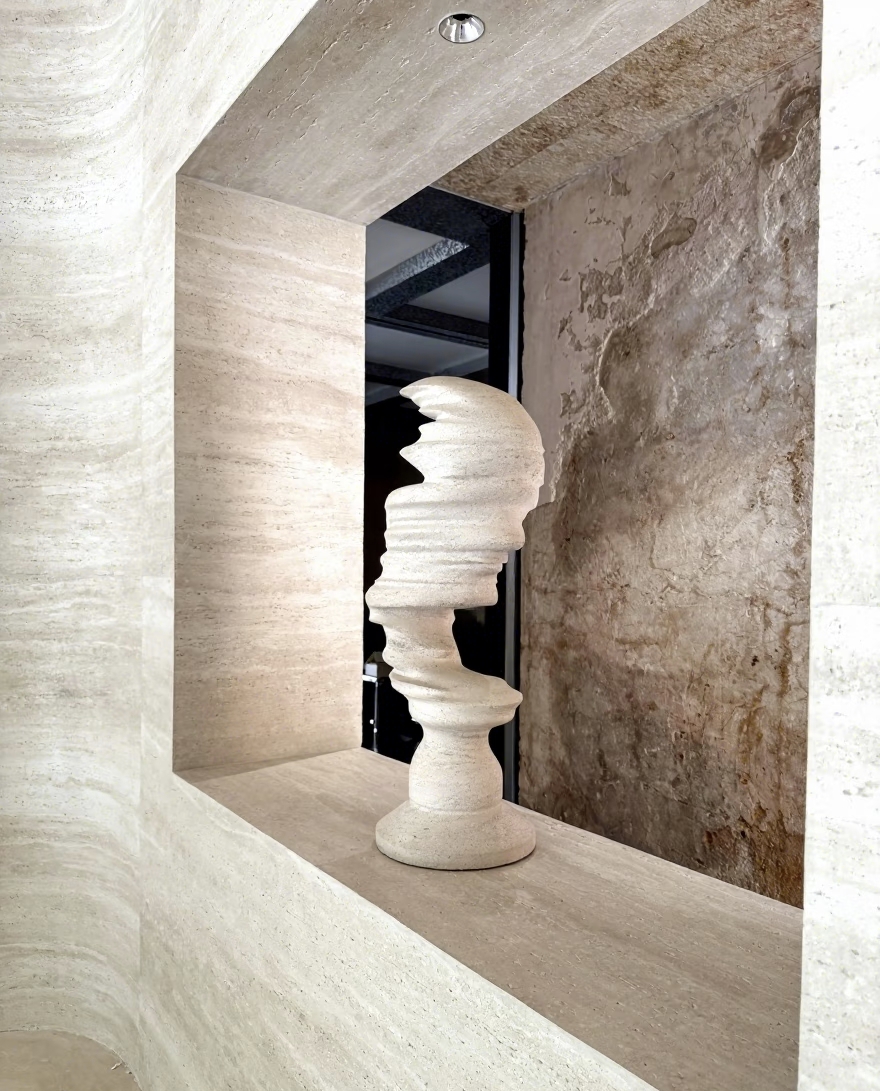
In the new construction sector, MCM soft stone performs equally well. In 2025 , MCM soft stone products were exported to over 30 countries , with exports accounting for nearly 30% of total production. At the BIG 5 GLOBAL 2025 construction exhibition in Dubai, Chinese MCM soft stone manufacturers made a strong collective appearance, accelerating their expansion into the Middle Eastern market. The Middle East and Africa region, driven by accelerating infrastructure development, saw MCM soft stone demand growth of 18.1% , emerging as a new growth pole.
V. Egypt and the Middle East Market: MCM Soft Stone's "Fit" Advantages
The Middle East boasts a massive building materials market. The GCC flooring market reached USD 16.1 billion in 2025. Egypt's ceramic tile market is projected to grow from USD 3.06 billion in 2025 to USD 4.33 billion by 2031 . Large‑scale residential and commercial development is directly driving demand for lightweight, efficient, and eco‑friendly wall finishing materials.
MCM soft stone's adaptability to the Middle Eastern market is multi‑dimensional. The region's climatic conditions – high temperatures, arid conditions, and intense solar radiation – impose stringent weather‑resistance requirements on building materials, and MCM soft stone's 3,500 hours of accelerated aging testing and 50‑year equivalent service life are more than sufficient to meet these demands. The Middle East's high labour costs make MCM soft stone's "pre‑fabricated + adhesive‑applied" installation model highly attractive, significantly reducing on‑site labour input. Moreover, Middle Eastern countries are placing increasing emphasis on green buildings, and MCM soft stone's green certification and low‑carbon profile are becoming key credentials for market entry.
In 2024 , Egypt's total ceramic product imports from China reached USD 50.94 million . China is Egypt's largest export source country in this category. With the advancement of mega‑city projects such as Egypt's New Administrative Capital and New Alamein City , alongside the release of urban renewal and old‑building renovation demand, MCM soft stone's growth potential in the Egyptian market is continuing to expand.
VI. OlinMat MCM Soft Stone – Bringing "Lightness" and "Green" to the Middle East Market
As a professional supplier deeply rooted in Egypt's building materials market for years, OlinMat has a profound understanding of the region's specific requirements – lightweight and safe, weather‑resistant and durable, efficient to install and consistently reliable.
OlinMat MCM Soft Stone Highlights:
✅ Green‑certified products, compliant with national and international environmental standards
✅ Lightweight and flexible – only 3‑8 kg/m², significantly reducing structural loads
✅ Class A fire rating – meets safety requirements for high‑rise and public buildings
✅ Micro‑porous breathable structure – water‑repellent and breathable, eliminating wall mould
✅ 3,500 hours of accelerated aging testing – 50‑year equivalent service life
✅ Easy installation – can be applied directly over existing walls, drastically shortening project schedules
✅ Rich colour and texture options – customisable to simulate stone, wood, brick, and more
We have a showroom and in‑stock warehouse in Egypt – customers can visit to view samples and experience product texture and flexibility firsthand. Whether for large‑scale projects, commercial space renovations, or urban renewal and refurbishment, OlinMat delivers professional product solutions and technical support.
📩 Interested in project collaboration or procurement? Let's talk!
Please reach out to us through our official website or social media channels – we'll respond promptly. OlinMat looks forward to partnering with you to bring lightweight, green, and high‑quality building solutions to every project.
Let me know if you need an Arabic version or any further adjustments. 😊